
Helping dogs have more good days
KetoPet helps dogs live longer, happier lives. We share free, research-based guidance on feeding your dog a low-carbohydrate diet, whether your dog is healthy, getting older, or dealing with cancer or seizures. Everything here is free, and always will be.
Read Our Free Guide
What's Really in the Bowl: a short, plain guide to the carbohydrates in dog food, and how to check your own dog's food.
GET THE GUIDEPlan Your Dog's Meals
Our free calculator works out how much to feed, homemade or ready-made, based on your dog's weight and activity.
CALCULATOR
Our Story: Where KetoPet Began
KetoPet began in 2014 as a ranch in Texas, giving shelter dogs with terminal cancer a home. We fed them a ketogenic diet and used positron emission tomography (PET) scans, the same imaging used in human cancer care, to see what it was doing. It isn't a cure. But it taught us that cutting carbohydrate matters most, for every dog.
The KetoPet Approach
Low-Carbohydrate Diet
Feed more meat and far less carbohydrate. For dogs with seizures or cancer, a stricter ketogenic diet may help.
Blood Glucose Checks
Ask your veterinarian for a blood glucose reading before you start, then again at two and four weeks to see it coming down.
Metabolic Conditioning
Get your dog's heart rate up with running, fetch and chase games, not just a gentle stroll, at a level that's safe for your dog.
Why Less Carbohydrate?
Much dry dog food is around half carbohydrate, yet dogs have no dietary need for it. Feeding less carbohydrate and more meat helps keep blood sugar steady and helps dogs stay lean, and lean dogs tend to move more easily and live longer.
A stricter, ketogenic version, where the body runs mainly on fat, has the most research behind it for seizures, and early research in cancer, though it isn't a cure.
Whatever your dog's age or health, we'll help you get started, and we'll always suggest doing it with your veterinarian.
Many of the dogs who came to the KetoPet ranch had been given just weeks to live. Some lived months or even years beyond that, still going for walks, enjoying belly rubs and playing catch. Not every dog did, and we won't pretend otherwise.
Those dogs taught us how much what goes in the bowl matters. Today we share what we learned with every dog owner, whether your dog is healthy, getting older, or facing an illness. Everything here is free, and always will be.
Case Studies
Stories from the KetoPet ranch: dogs with hemangiosarcoma, mast cell cancer and seizures, and what a low-carbohydrate, ketogenic diet meant for them.

Cali was the first dog through the KetoPet program. She was diagnosed with hemangiosarcoma in 2014 and given six weeks to live. She lived years beyond that, and has since passed. She is the reason there was a second dog.
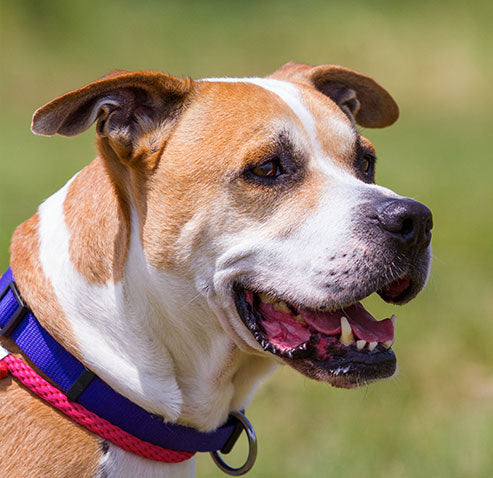
Blazer was a sweet, rambunctious Staffordshire mix. KetoPet took him in after he was diagnosed with a Grade II mast cell tumor. When his story was written, he was in good health with no evidence of cancer. He has since passed.

Sasha began having grand mal seizures after a brain injury from a dog bite at six months old. Her family moved her to a ketogenic diet and, over time, off her seizure medication. When her story was written, she was seizure-free. Never stop or lower seizure medication on your own; change it slowly, with your veterinarian.
Has your dog been diagnosed with cancer?
We know how frightening this is. Our guide for families facing a diagnosis explains what a ketogenic or low-carbohydrate diet is, what the research does and doesn't show, and how to start safely with your veterinarian.
Read the guide ›